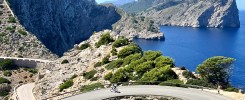
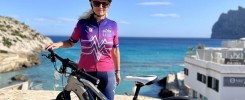
Let’s be honest: Mallorca 312 isn’t your average fondo. It’s The Gran Fondo. 312 kilometers, over 5,000 meters of climbing, and more stunning switchbacks than you can count. But fear not — if you’re a dedicated amateur cyclist clocking 8–10 hours a week (with weekend 4+ hour rides with your group), you’re absolutely capable of making it to the finish line in one piece — and ideally, with a smile on your face.
But there’s a world of difference between finishing and flourishing. To ensure your Mallorca 312 turns into a day to remember (and not a 12-hour death march filled with existential questions), some smart preparation is key.
YOUR GAME PLAN: THE TRAINING
To get your legs and lungs ready for this rollercoaster of a day, here’s a training structure to guide you over the final 12 weeks:
Long Rides (Endurance is King)
- Think Zone 2 epics: Start around 100 km, build up to 160–180 km
- Double ride weekends are gold: e.g., 100-160 km Saturday + 80-100 km Sunday or vice versa
- It’s all about time in the saddle — your chamois should become a close friend
Sweet Spot Intervals (Just Below the Red Zone)
- Zone 4 intervals once a week: Start with 2×10 min and build up to 4×30 min
- This is the engine room — train here and watch your sustainable power skyrocket
Power Intervals (Strength on the Bike)
- 1-minute Zone 5 efforts at low cadence (60–70 rpm) with 3-min rest
- Start with 8 reps and work up to 20 (yes, 20 — you’ll thank me on race day)
- Feel the burn? Good. You are heading in the right direction.
Easy Rides (Because Recovery = Gains)
- Fill in your week with as many low-intensity Zone 2 spins as life allows
- If you have a max of 1 hour early morning or late evening – do it!
- These rides flush the legs and keep your base solid.
Gym Work (The Secret Sauce)
- 1x per week: strength & mobility for core, back, hips, and arms
- Bonus: fewer cramps, better posture, and less saddle fatigue, remember it’s going to be a long day in the office.
Nutrition Training (Fuel Like a Pro)
- Practice race fueling now, not during the race
- Aim for 90+g of carbs/hour — drink every 20 min, eat every 40
- Set an alarm on your bike computer reminding you to eat and drink regularly.
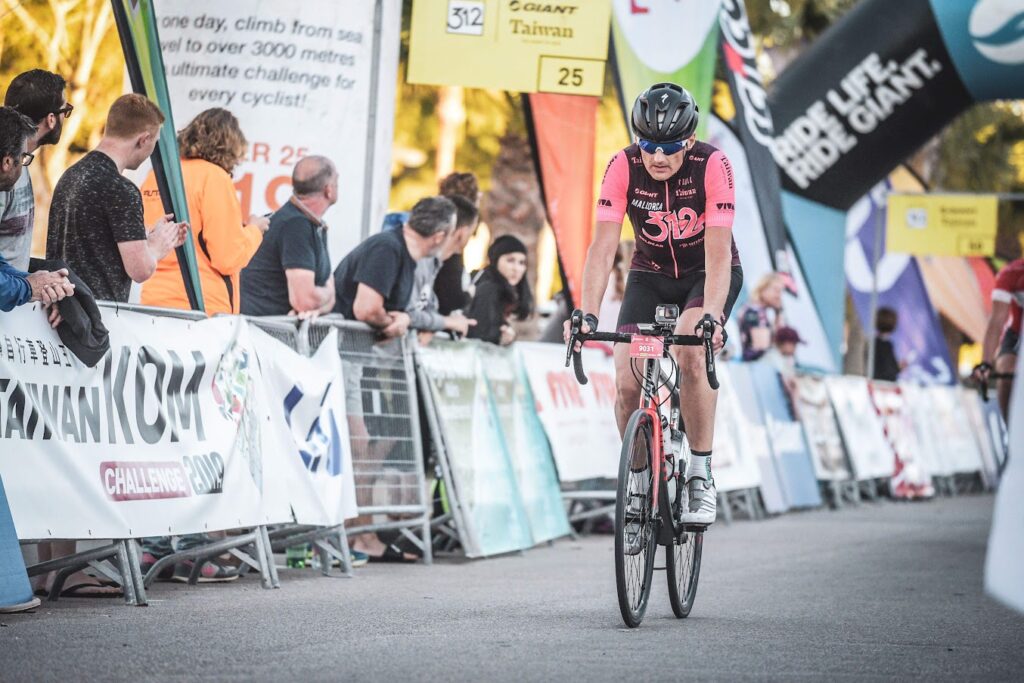
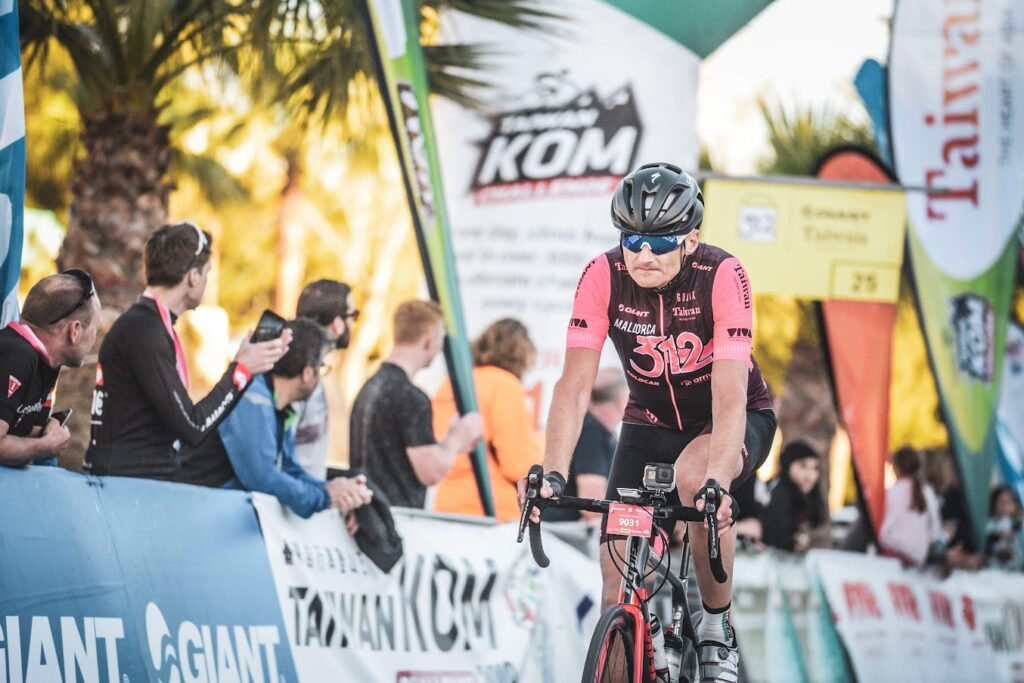
MALLORCA 312 – BEFORE STARTING GUN
- Weather and Clothing Strategy
Typical Conditions:
- Morning (6:00–9:00): 8–12°C, potentially chilly with wind
- Midday (11:00–15:00): 18–22°C, sunny, dry
- Late afternoon (15:00–18:30): Still warm, but potentially windy and exposed.
Recommended Kit:
- Summer jersey and bib shorts
- Arm warmers (removable)
- Lightweight wind vest or gilet (packable)
- Thin base layer to manage sweat in changing temps.
Avoid: Thick thermal layers or anything hard to remove/store mid-ride.
- Bike Setup and Equipment
Essential Checks (Day Before):
- Drivetrain cleaned and lubricated
- Brakes in full working order (especially for long descents)
- Tyres in good condition, pressure adjusted for weight/road grip
- Gears shifting properly
- Torque bolts (especially saddle, stem, pedals)
Recommended setup:
- Compact or mid-compact crankset (e.g., 50/34 or 52/36)
- Rear cassette 11–34 is ideal for comfortable climbs but 11-30~32 will do
- Two bottle cages with ideally 1000 ml bottles
- Front and rear lights (mandatory at start)
- Standard saddle bag equipment.
- Nutrition & Hydration Strategy
Fuelling Targets:
- Carbohydrates: 90g/hour from 1 hour
- Fluids: ~500–750 ml/hour (more if hot) from 1st hour
- Electrolytes: At least 500–1000 mg sodium/hour
What to Carry:
- maximum number of energy bars/gels +2
- snickers bars, salty bars of any kind
- real food (rice cakes, sandwich, fig bars)
- Electrolyte tablets or mix in bottles
- Caffeine gels for later in the ride (if tolerated)
- Logistics and Accommodation
Start location: Playa de Muro
Start time: 6:30 sharp
Arrival at start: By 5:30 at the latest to secure a decent starting position
Accommodation Tips:
- Stay in Playa de Muro or Puerto Alcudia as close as possible
- Book 6+ months ahead; hotels fill up fast
- Check for early breakfast options or prepare your own
Getting there:
- Arrive in Mallorca at least 2 days early to assemble your bike and test it
- If flying with your bike, confirm airline bike policy and availability of space for the bike on a plane
- Optionally, book a local mechanic for assembly and safety check
- Start Line Strategy
Why early arrival matters:
- The route is narrow within the first 10 km with traffic islands, curbs, speed bumps, potholes
- Riders grouped behind slower bunches can lose 20+ minutes before the first climb
- Late start will make you stopping/walking in the crowd on first climb
Cut-off Times:
- ~97 km (Coll de Claret): must pass by ~11:15
- ~220 km (Sa Pobla): must pass by ~16:30
MALLORCA 312 – THE RACE
START LINE TO PORT DE POLLENÇA
Get to the front. Seriously. The race isn’t neutralized and the front will be riding like it’s Flanders. Once the gun goes off, it’s chaos: roundabouts, potholes, speed bumps, nervous amateurs trying to find wheels.
Your job? Stay cool. Ride within yourself, enjoy the sunrise over the bay, and warm up properly. This isn’t where you make your day, but it might be where you lose it. Crashes are common in the first 10 km, and it’s narrow, so be alert. Once you hit the roundabout at Port de Pollença (km 15), you swing left. Start looking for a decent group and latch on. This group will carry you to the first proper effort of the day.
PORT DE POLLENÇA TO PUIG MAJOR (TÚNEL DE MONNÀBER)
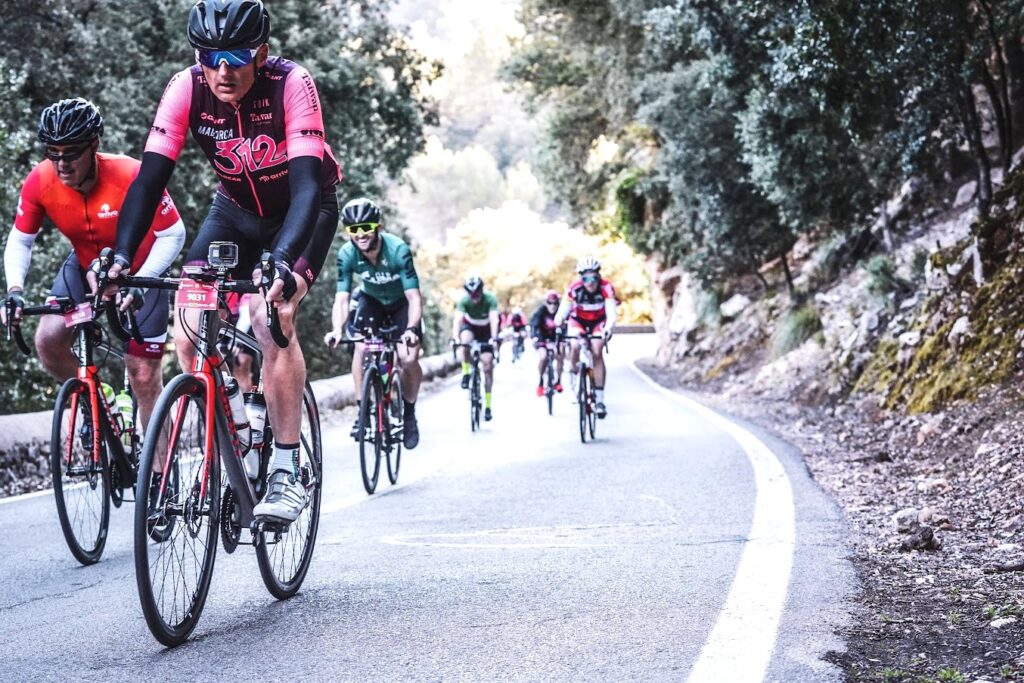
Here comes Col de Femenia. Don’t go full gas. Think of this climb as your last chance to properly warm up your legs and your first chance to ruin your race if you go too hard. Sit in, hold steady watts, and enjoy the early-morning light on the rocks.
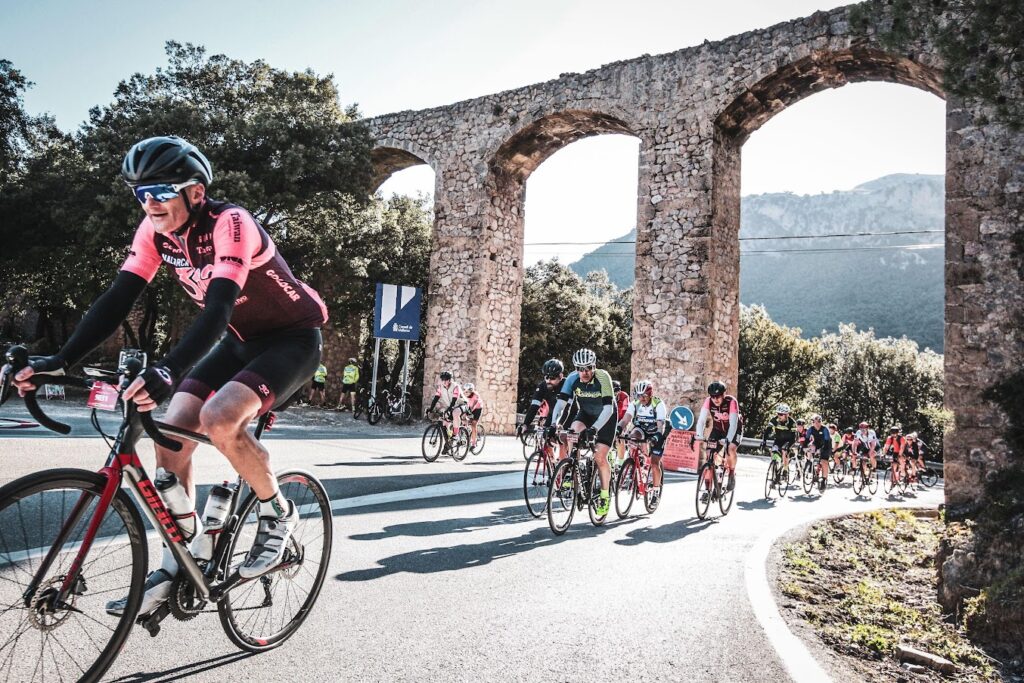
From the top, it’s a series of rollers and fast descents. Don’t let gaps open. Pedal into the climbs, stay aero on descents, and play smart. Stay on the left side of the road as photo loving cyclists will be on the right taking pictures. At the aqueduct turn left to hit a small climb.
The Gorg Blau feed zone appears soon after a small tunnel. Water only — skip it if you’re loaded. The real work begins now: a steady climb up to Puig Major and the Tunnel de Monnàber. Settle in. This is not steep, but it’s somewhat long. Once inside the tunnel, you’re in the highest point of the race.
PUIG MAJOR TO VALLDEMOSSA
Enjoy the next 15 km. The descent to Sóller is as smooth as it gets. Stay tucked, but keep pedaling. Don’t nap — it’s not a holiday just yet. Watch out for goats. If you hear distant bleating or the jingle of bells, stay sharp, if you hit one of those this is the end of racing.
From Sóller you climb again, this time toward Deià. Fresh tarmac helps. If wind picks up, it usually starts here. Stay sheltered. In Deià, mind the tight streets and the speed bumps.
After Deià, a sharp little climb takes you to Valldemossa. There’s water here, and you’ll want it. Refill.
VALLDEMOSSA TO BANYALBUFAR
If you’re ahead of the time cut (11:15), you’ll take a sharp right toward Banyalbufar. It gets quieter and prettier here. A relaxed climb to Col de Claret sets you up for a fast, winding descent into Banyalbufar. Goats again, so stay alert, enjoy glorious sea views. At Sa Bastida (km ~100), you get a real feed station. Eat. Drink. Laugh nervously. Still over 200 km to go.
BANYALBUFAR TO ANDRATX
This stretch rolls like a DJ on a Saturday night. There are no major climbs, but you’ll feel every bump. Past Estellencs, another feed station. Stock up.
Around km 120, you hit the twin tunnels and then the final pass of the MA-10: Coll de Gramola. It’s always windy. Stay low, stay tucked in, or risk becoming very tired.
Then the descent to Andratx. It’s long, fast, and a mental reset. Enjoy it.
ANDRATX TO ALARO
Time to turn east. The island now wants your soul.
You start with the short but annoying Col de Sa Coma. Then it’s Galilea. It’s longer, it bites. Descend into Puigpunyent, where you climb again — Coll de Grau de Superna. This is 150 km. You’re now halfway. The easy half is done. The real race begins here.
You MUST catch a group. Hold it. The road drops, then flattens toward Alaró. This is one of the few fast sections, but also exposed. Wind here can be cruel. Don’t get caught solo.
ALARÓ TO SA POBLA
This segment looks easy on paper. It isn’t. Small climb over Coll de Tofla, then a narrow descent with dodgy tarmac and gravel on the sides.
From here it rolls, and there’s a feed station in Lloseta. Keep fuelling. Descent from Campanet has sneaky speed bumps and a sharp turn — stay alert.
Reach Sa Pobla before 16:30 and you’re cleared to go the full 312 distance.
SA POBLA TO ARTÀ
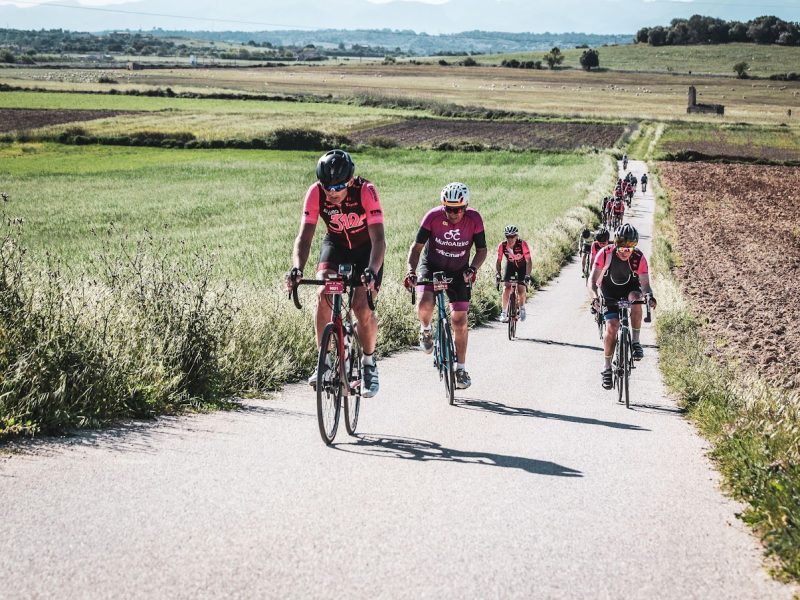
This is the oven. Wide open fields, heat radiating from all angles, and usually a headwind.
From Sa Pobla you pass Muro, Santa Margalida, and then Petra. Stay tucked in your bunch. Eat like it’s your job. Hydrate like you’re in a desert.
After Petra, the climbing resumes. First a few “Petra steps”, then a steep drop into Bosquet Valley. Watch the braking — sharp corners, tighter than expected. Then, the Bosquet Wall: 2 km, 10%, and this deep in the day, it hurts but it ends. One long drag later, and you reach Artà.
ARTÀ TO FINISH (PLAYA DE MURO)
After nearly 280 kilometers of relentless terrain and over 4,000 meters of climbing, you reach Arta—not just another town on the map, but the edge of your physical and mental limits. You stopped feeling your legs long ago, your saddle feels like a medieval torture device, and your stomach is not cooperating.
And then, just as the shadows grow long and your morale is beginning to dip into dangerous territory, you roll into Arta’s central plaça—and everything changes.
It’s not a feed station. It’s a real fiesta, a mind blowing party. There’s music echoing off stone walls, volunteers serving trays of food and cyclists being treated like heroes. No gels, nor bars, no isodrinks. There’s paella. There’s beer. There are olives, crisps, watermelon slices and anything you can or cannot imagine. You don’t need to reach for anything—they bring it to you.
One thing becomes crystal clear: if you’ve made it to Artà, you will make it to the finish.
One final climb, a gentle rise from Artà, and then you point the bike north. The last descent is fast, two mini hills to keep legs moving before the final stretch.
Long, flat push past Can Picafort. Forest on the right. Hotels appear.
You hit the final roundabout. Then the bridge. You hear the music, crowds getting bigger.
Then the red flag: 1 km to go.
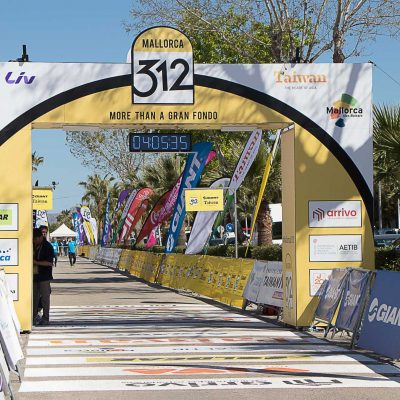
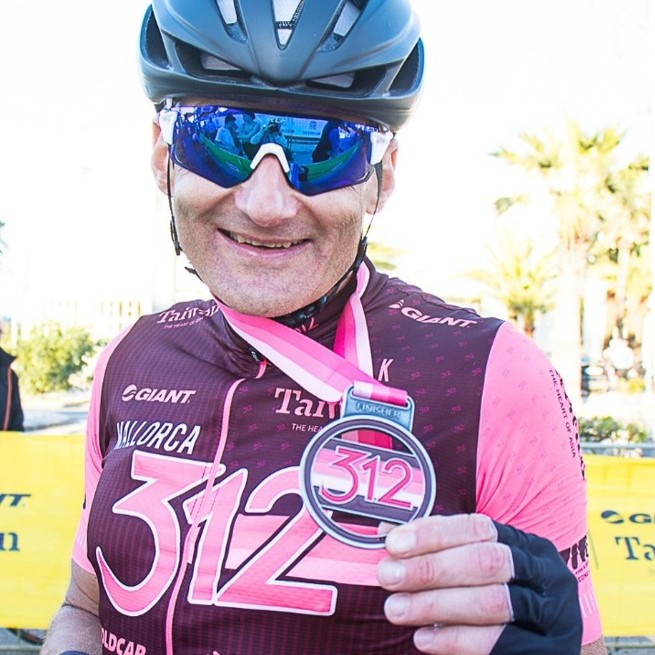
You cross the line. You did it. Medal. Applause. Tears.
About the Author:
Jarek Oworuszko. A Ciclos Major guide. Finisher of the 70.3 IronMan World Championships and other IronMan competitions from sprint to full distances. Proud holder of IronMan AWA Silver Status. Completed over 20 marathons and several ultra and trial runs. Finisher of Mallorca 312 race. Participant of mountain races in Poland, Slovakia, Czechia as well as indoor and open-water swimming championships. Certified swimming instructor and triathlon coach.